AAC block in India - From introduction to popularity
A new phase in Indian construction
Autoclaved Aerated Concrete (AAC) blocks have emerged as the top choice for builders around the world. Just a decade ago, few people had even heard of them, but nowadays it is very common in India and around the world. AAC blocks
are cleaner, faster, and more sustainable than clay bricks.
In this blog, we will discuss how AAC blocks have become the preferred choice for builders who value long-term performance and eco-friendly design.
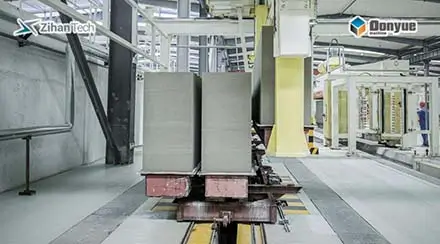
Think of AAC blocks as the lightweight version of a clay brick — just smarter. The recipe is simple: sand, cement, lime, fly ash, water, and a bit of aluminum powder. When this mix is steamed in a pressurized chamber, it expands
and hardens into a block full of tiny air bubbles.
Those air pockets are what make AAC special. They cut weight, help with insulation, and still hold up strong against pressure. Builders like them because they significantly cut energy costs, keep the structure light, especially on
multi-floor projects.
AAC technology has a long history. It wasn’t born in India. It started in Sweden back in the 1920s as a cleaner alternative to clay-based masonry. Over time, it spread across
Europe and then to Asia. India got its first AAC factories
in the early 2000s.
At first, very few builders showed interest. Awareness about AAC was low, and the material seemed expensive. But when environmental rules tightened and project deadlines got shorter, AAC began to make sense. Developers saw that it
saved cement, cut plaster use, and finished walls faster. That’s when things started to change.
Growth of AAC blocks in the Indian market
By the mid-2010s, states like Maharashtra, Gujarat, and Telangana had multiple AAC factories. Developers started advertising AAC-built homes as energy-efficient and future-ready. The perception shifted from “expensive material” to
“smart investment.”
Fly ash utilization: Thermal power plants were producing tons of fly ash; AAC turned that waste into value.
Government projects: Smart cities and housing for all require faster and safer walling solutions.
Why AAC block become the builder’s favorite?
There are a lot of reasons to choose AAC block as the favorite construction material instead of red clay brick. AAC blocks are sustainable and save construction time. It cuts effort, speeds up timelines, and lowers structural loads.
Some reasons that made AAC popular across India:
Thermal comfort: In many parts of India, summers touch 45 °C. AAC walls keep indoor temperatures lower, meaning less AC use.
Energy savings: Reduced cooling costs make a real difference for residents.
Speed: Larger block sizes mean walls go up roughly twice as fast.
Green compliance: Meets new energy codes and LEED standards easily.
Cost efficiency: Even though the price per block is higher, overall project costs drop by 15–25%: less mortar, less plaster, less labor.
India’s AAC market: Size, growth, and forecast
India’s AAC block industry is now one of the fastest-growing segments in the construction material market. According to TechSci Research (2024), the India AAC Block Market is expected to grow at a CAGR of 14.25% during 2024–2030. Urbanization, government housing programs, and a strong push for green construction are driving the numbers.
Geography analysis – India’s role in the Asia-Pacific
The Asia-Pacific region leads the AAC revolution, holding over 46% of global demand. Two countries drive most of that: China and India. China took the lead earlier, but India is catching up fast. Cities like Hyderabad, Pune, Ahmedabad, and Bangalore are now major AAC consumers. Builders there cite lower maintenance and higher resale value as key motivators.
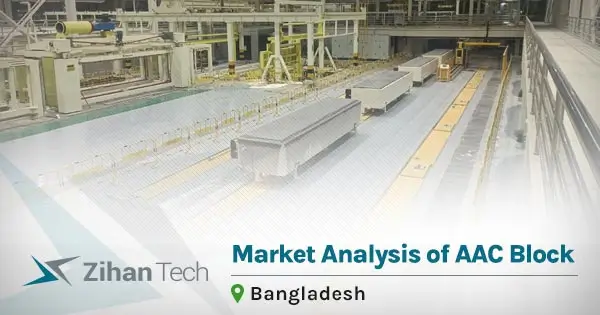
Bangladesh is following a similar path with rising interest in green construction. Machinery and expertise are often shared regionally, creating a stronger South Asian network of AAC producers.
Challenges facing the Indian AAC market
Every growing industry has its hurdles. AAC is no different. The good news? Awareness programs and joint initiatives between the government and private firms are already addressing these gaps. Each year, more cities are adding AAC
workshops to train workers.
Despite strong demand, a few things still slow down its reach:
Limited awareness among small-scale builders and contractors.
High plant setup costs and dependence on imported machinery.
Logistics challenges due to bulky transportation.
Shortage of skilled labor familiar with AAC installation techniques.
The future of AAC in India
The future of AAC blocks in India is very inspiring. Industry experts predict AAC block will account for nearly 40% of total walling material usage by 2030. Growth will be supported by:
Expansion of urban housing projects.
Introduction of stricter environmental standards.
Broader participation of private developers.
Increased plant capacity in northern and eastern India.
As India continues its transition toward sustainable infrastructure, AAC blocks will remain a cornerstone material for the future of modern construction.
A few thoughts before we wrap up
The story of AAC in India is one of steady progress and change. From small pilot projects to national acceptance, AAC has earned its place brick by brick. It’s cleaner, quicker, and simply makes sense for the way we build today.
And the ripple effect doesn’t stop at India’s borders. Neighboring countries, including Bangladesh, are stepping into the same future. With reliable machinery partners likeZihan Tech.
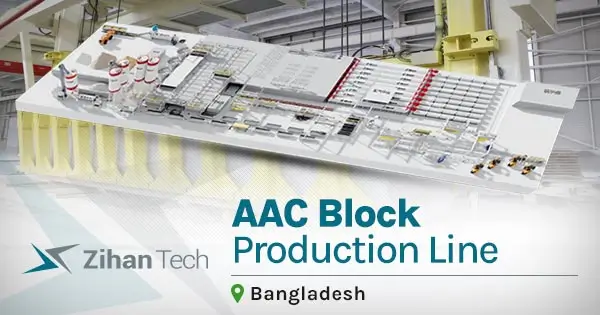
Investors in Bangladesh as well as in India can confidently set up AAC block & Panel production lines with Zihan Tech that match global standards.
AAC blocks entered the Indian market in the early 2000s. Initial adoption was slow, but by the 2010s, major developers started using them for large-scale projects.
Yes, in most modern projects. They’re lighter, more energy-efficient, and faster to build with. The only drawback is the slightly higher initial cost, which is offset by long-term savings.
On average, AAC blocks cost between ₹3,000 – ₹4,000 per cubic meter, depending on brand and location. However, total project costs often go down because it significantly reduces the dead load of the structure.
Maharashtra, Gujarat, Telangana, Tamil Nadu, and Karnataka are leading in AAC adoption, mainly due to their rapid urban development and established manufacturers.
Absolutely. They use fly ash (a recycled waste product), emit less CO₂ during production, and improve a building’s energy performance, making them one of the most sustainable walling materials.
Yes, but they may require training to work effectively with AAC. Once familiar, many masons prefer AAC because it’s cleaner and easier to install.
Extremely promising. By 2030, AAC is expected to replace a large share of red bricks in both urban and semi-urban construction, driven by government sustainability goals.
Looking for an AAC Block and Panel Production Line in Bangladesh? Get high-quality, efficient solutions with Zihan Tech. Contact us for a free quote today!
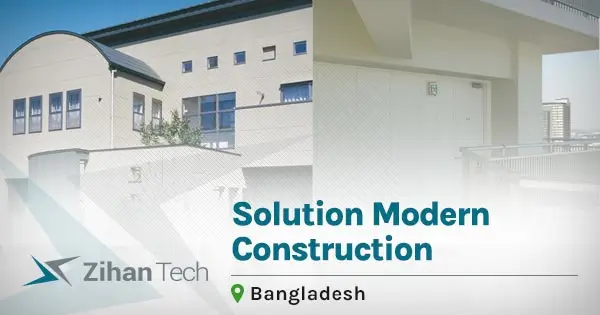
AAC blocks are the modern solution for modern construction. Discover how this lightweight, eco-friendly building material is transforming Bangladesh’s future.