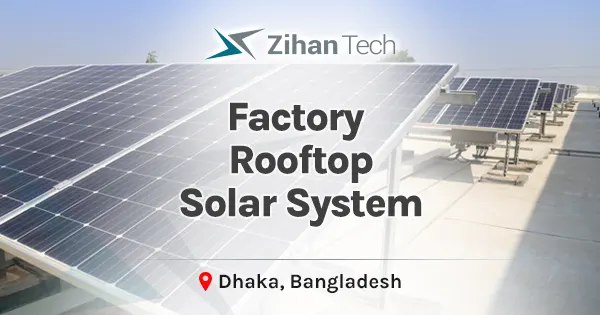
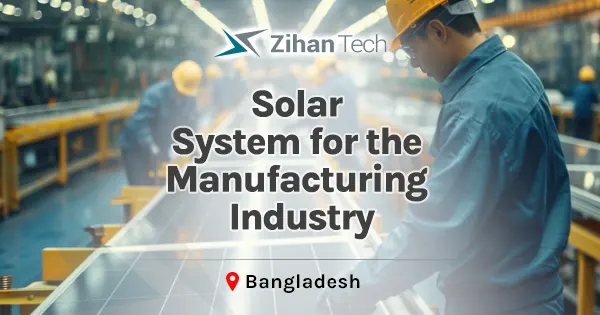
Why industrial rooftop solar system isn't just a choice but a smart investment
Energy has always been one of the highest operating costs for factories. In Bangladesh, that
reality is becoming even more evident. Electricity tariffs continue to rise, diesel generator
fuel costs fluctuate, and industrial operations
increasingly depend on reliable power.
Energy planning directly affects production costs, operational stability, and long-term
competitiveness. Industries and commercial buildings across the country are evaluating
industrial rooftop solar systems as a strategic investment.
Instead of relying on grid electricity or expensive diesel generators, businesses are turning
unused rooftop space into a reliable source of power. A properly designed solar system can
generate electricity for more than two decades,
significantly reduce operating costs, and improve long-term energy stability.
If you are exploring solar for your facility, the first practical step is a professional
evaluation. Request a site survey to understand the solar potential of your factory rooftop.
Real energy cost problem for industries in Bangladesh
Manufacturing industries in Bangladesh operate under constant pressure to manage production
costs. Energy expenses play a major role in this equation. Over the past several years,
industrial electricity tariffs have gradually increased.
While generators provide emergency support, they come with high operating costs.
Diesel prices fluctuate frequently, generator maintenance adds additional expense, and running
generators for extended hours can dramatically
increase production costs. For many factories, this backup power option becomes one of the most
expensive energy sources.
Industrial energy cost comparison in Bangladesh
Rooftop solar offers an alternative approach. By generating electricity directly from sunlight,
factories can reduce their dependence on both the grid and diesel generators while stabilizing
long-term energy expenses. Here is a simple
cost comparison for rooftop solar against a diesel generator:
Energy source
Average cost per kWh
Cost stability
Long-term trend
Grid Electricity
8-12 BDT
Medium
Gradually Increasing
Diesel Generator
30-45 BDT
Low
Highly Volatile
Rooftop Solar
4-6 BDT
Very Stable
Declining Over Time
The difference becomes significant when scaled across large industrial operations where
electricity consumption can reach hundreds of thousands of units each month.
What is an industrial rooftop solar system?
An industrial rooftop solar system is a
large-scale solar power installation designed for factories, warehouses, and commercial
buildings. Instead of occupying land, the solar panels
are installed directly on the rooftop of the facility.
The system works by converting sunlight into electricity using photovoltaic (PV) panels. During
daytime hours, the generated electricity is used by the factory's internal electrical system,
reducing the amount of power drawn from the
national grid.
Key characteristics of an industrial rooftop solar system include:
Industrial-grade inverters that convert solar energy into usable electricity
Structural mounting systems designed for large roofs
Monitoring systems that track energy production and performance
With proper installation and maintenance, these systems typically operate efficiently for
20-25 years or more.
Why rooftop solar is a smart investment for factories
Industrial rooftop solar is often discussed in the context of sustainability, but its strongest
argument is financial. For factories with large rooftops and high electricity consumption, solar
power becomes a long-term asset that generates
consistent savings year after year. Key advantages include:
Significant reduction in electricity bills through on-site energy generation
Surplus energy produced is transferred to the main grid.
Protection against rising electricity tariffs over the long term
Productive use of unused rooftop space without requiring additional land
Long system lifespan of 20-25 years, ensuring sustained returns
Low maintenance requirements compared to traditional energy systems
Improved environmental and sustainability profile for export industries
Solar vs Diesel Generator: A long-term financial comparison
Many factories rely on diesel generators to maintain production during power interruptions. While
generators remain useful as backup systems, they are not designed to serve as primary energy
sources. Fuel costs are high and unpredictable.
Maintenance requirements are frequent. Noise and emissions create additional operational issues.
On the other hand, solar energy requires no fuel and produces electricity silently with minimal
maintenance. For these reasons, the industrial rooftop solar system is becoming a smart choice.
Here is a comparison between the industrial rooftop and the diesel generator:
Factor
Diesel Generator
Rooftop Solar
Fuel Cost
High and variable
None
Maintenance
Frequent servicing required
Minimal
Operating life
8-10 years
25+ years
Emissions
High carbon emissions
Zero operational emissions
Cost Trend
Increasing
Stable and predictable
Typical factory rooftop potential in Bangladesh
Many industrial buildings in Bangladesh have large unused rooftops that can support solar
installations. The amount of electricity that can be generated depends primarily on available
rooftop area and structural capacity.
Rooftop Area
Approximate Solar Capacity
10,0000 sq ft
~1000 kW
50,000 sq ft
~500 kW
30,000 sq ft
~300 kW
This means even medium-sized factories can generate a significant portion of their daily
electricity demand directly from solar power.
Payback period and ROI for industrial solar
One of the most important questions factory owners ask is how long it takes to recover the
investment. In Bangladesh, industrial rooftop solar systems typically achieve a payback period
between 3.5 and 5 years, depending on
system size, electricity consumption patterns, and current tariff rates.
After the payback period, the system continues generating electricity at very low operating cost
for the remainder of its lifespan. Here is the estimated payback period table for industrial
solar systems:
System Size
Approximate Investment
Annual Savings
Estimated Payback
200 kW
1.4-1.6 Crore BDT
30-35 Lakh BDT
4-5 Years
500 kW
3.2-3.6 Crore BDT
75-90 Lakh BDT
3.5-4.5 Years
1 MW
6.0-6.8 Crore BDT
1.5-1.8 Crore BDT
3.5-4 Years
These figures vary depending on project specifications and site conditions, but they illustrate
why rooftop solar is increasingly considered a high-return infrastructure investment.
Why more factories in Bangladesh moving to solar?
Industrial solar adoption in Bangladesh is growing steadily for several reasons. Export-oriented
industries increasingly face sustainability expectations from international buyers. That's why
more factories in Bangladesh are moving
to solar power.
Here are some common factors that are accelerating adoption:
Rising grid electricity costs
Increasing awareness of long-term energy planning
Strong return on investment
Corporate sustainability initiatives
Large available rooftop space in industrial zones.
Conclusion: Solar is a strategic energy investment
Energy planning is becoming a critical part of long-term business strategy. Rising electricity
costs and reliance on diesel generators are pushing industries to look for more stable and
cost-effective energy solutions.
Factories can reduce energy expenses by using a rooftop solar system. Zihan Tech, a leading solar panel provider in Bangladesh, supports
factories and commercial buildings with dependable rooftop solar solutions tailored for industrial
needs.
Book a consultation to evaluate your rooftop
potential and expected savings.
The cost depends on system size, equipment quality, and installation complexity.
On average, industrial solar installations range between 6–7 crore BDT per
megawatt, with smaller systems priced proportionally.
Most systems recover investment within 3–5 years, depending on tariff and system
size. After payback, electricity generation continues for 20+ years with minimal
operating cost. Larger systems often achieve faster ROI due to scale efficiency.
Most industrial solar panels come with 25-year performance warranties. Inverters
typically last 8–12 years and may require replacement once during system life.
The process requires documentation and utility coordination but is structured
and manageable with proper EPC guidance. Professional support simplifies
approval and inspection steps.
Maintenance is relatively low. Periodic cleaning and system inspection help
ensure optimal performance.
Solar significantly reduces the need for generators during daytime operations,
but generators are usually kept as backup for nighttime or emergencies.
Roughly 100 square feet of rooftop area is needed per 1 kW of solar capacity.
Industrial rooftop solar: a smart investment
Rooftop solar cuts factory energy bills and generator use. It's a low-maintenance way to
turn unused space into reliable power.
Discover how solar systems help manufacturing industries in Bangladesh reduce energy costs, improve ROI, and achieve long-term business sustainability.
We provide the best auto brick machinery and tunnel kiln systems in Bangladesh. High capacity, fuel-efficient, and complete turnkey support. Call: +8801841119091



 +8801841119091